
 X
XQuick Search

Pushing the Boundaries for Liver Transplantation in Hepatocellular Carcinoma
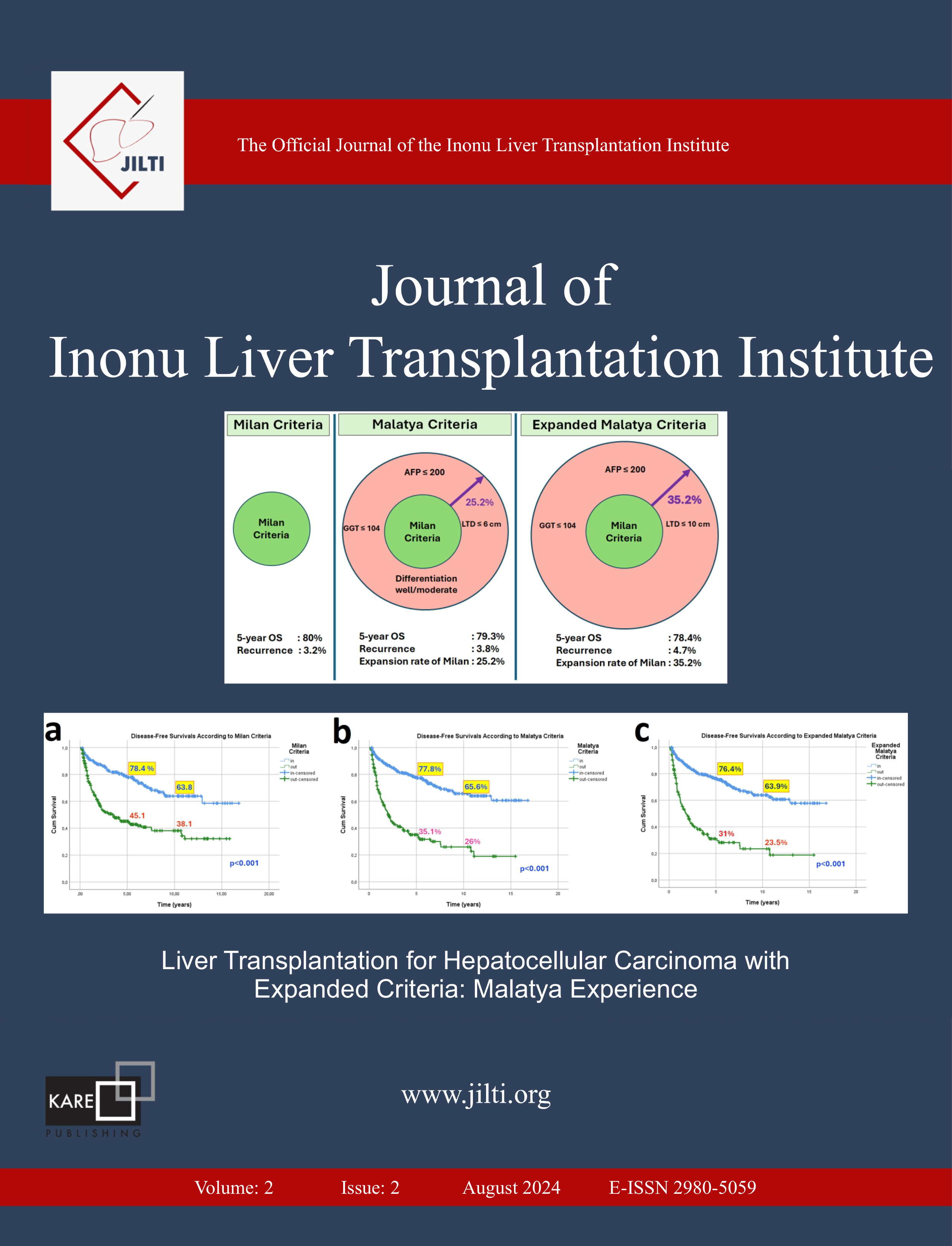
Volkan InceDepartment of Surgery, Inonu University, Liver Transplantation Institute, Malatya, TürkiyeLiver transplantation (LT) is the only curative treatment for unresectable or decompensated cirrhotic patients with hepatocellular carcinoma (HCC). Currently, the transplantable window for HCC patients is defined by meeting the extended transplant criteria. Notably, 20-30% of patients who beyond all established transplant criteria have demonstrated survival more than 10 years post-transplant, indicating that current selection criteria may exclude individuals who could significantly benefit from LT. Therefore, there is no perfect criteria currently, as these patients are excluded from the possibility of transplantation. Limits should be pushed to make LT possible for these patients.
Patients meeting the Expanded Malatya Criteria had a 78.4% 5-year overall survival (OS), a 4.7% recurrence rate, and a 35% Milan Criteria expansion rate, suggesting that the Expanded Malatya Criteria provide a reasonable approach for expanding transplant candidacy.
In cases of LT for patients with macroscopic portal vein tumor thrombus (Macro-PVTT), limited data from the Malatya experience indicate encouraging outcomes using living donor liver transplantation (LDLT): Macro-PVTT patients categorized as Vp1-3 with low alpha-fetoprotein (AFP ≤200) and gamma-glutamyl transferase (GGT ≤104) levels demonstrated five-year OS and disease-free survival (DFS) rates of 100% and 68.6%, respectively.
Another challenging cohort includes BCLC stage D patients, typically offered only supportive care with an expected median survival of three months. However, selected patients aged 18 to 65, CHILD class C, without extrahepatic spread and beyond Expanded Malatya Criteria, achieved a three-year survival rate of 50% following salvage LDLT.
In conclusion, during the era of LDLT, it is recommended that all HCC patients be evaluated in a multidisciplinary tumor board, irrespective of transplant criteria.
Keywords: Advanced HCC, live donor, macrovascular, macroscopic portal vein tumor thrombus, salvage liver transplantation, best supportive care
Manuscript Language: English